
May 1, 2026
/
When Your Landscape Starts Showing Warning Signs
May is when a lot of landscapes start waving little warning flags.
If you’ve been wondering, “what’s wrong with my plant leaves?” this is often the time of year when those answers start showing up more clearly.
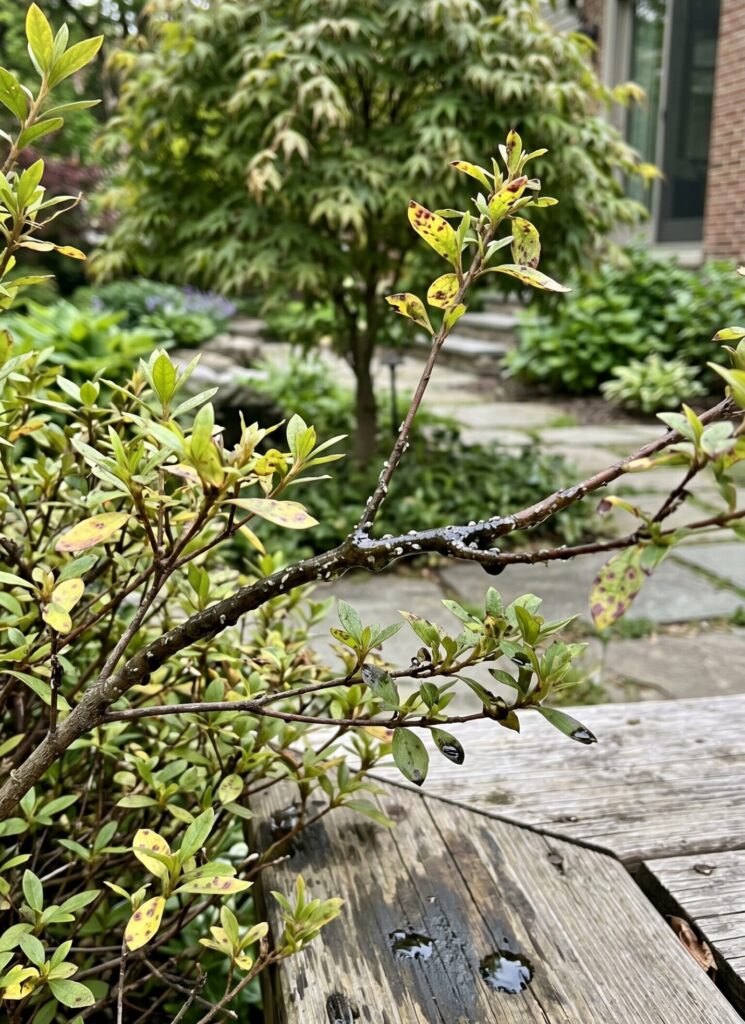
A shrub looks a bit thin. Leaves start spotting. Something sticky shows up on a branch, or worse, on the patio under it. A tree that looked perfectly fine a few weeks ago suddenly seems a little off. This is the time of year when insect and disease issues often start becoming more visible, which is also why it is the time of year when people are most tempted to spray first and ask questions later.
Usually, that is not the best first move.
What’s Happening Right Now (and Why Your Plant Leaves Look Off)
In May, plants are pushing fresh growth fast. That is great for the landscape, but it also means this is when problems can start to show themselves more clearly.
The tricky part is that not every struggling plant has an insect or disease issue. Sometimes the real problem is stress. Sometimes it is root trouble. Sometimes it is a site or soil issue. And sometimes insects or disease are only part of the picture. The pattern of damage mattersIf you’ve been wondering, “what’s wrong with my plant leaves?” this is often the time of year when those answers start showing up more clearly.. Where it shows up, whether it is on old or new growth, and whether one plant is affected or several can help point to the real cause.
That is why blanket spraying is rarely the smartest answer. Treatments can absolutely be useful, but they work best when they are tied to a real diagnosis and a real plan. Used carelessly, pesticides can create unnecessary risk for people, pets, pollinators, and the surrounding landscape.
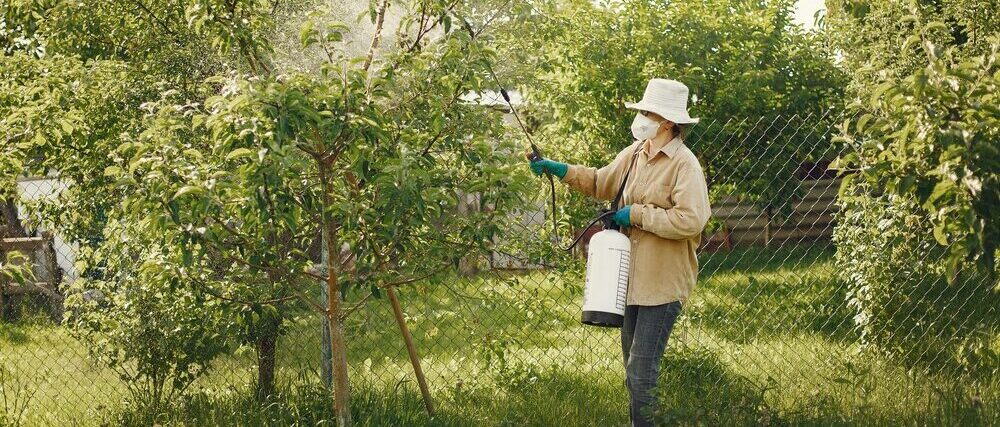
Before You Spray: Why Timing and Diagnosis Matter So does timing.
This is not an anti-treatment speech.
Sometimes treatment is exactly what a landscape needs. The bigger point is that good treatment is targeted treatment. The right product at the wrong time may not do much. The right treatment, timed well and aimed at the right issue, is a different story.
That is especially true in May, when problems are often just starting to build. Catching an issue earlier can give you more options. Waiting until a plant is clearly declining can make the path forward more limited and more expensive.
What to Look For Before You Do Anything
Before you think about sprays, take a closer look.
Check the tops and undersides of leaves. Look at stems and bark. Notice whether the issue is isolated to one plant or showing up across several. Watch for sticky residue, black buildup, white cottony material, repeated thinning, unusual spotting, or dieback.
Sticky residue is worth paying attention to. Some insects leave behind honeydew, and black sooty mold often grows on that sugary coating.
That does not mean every sticky leaf needs the same fix. It just means the landscape is telling you something, and it is worth understanding what that something is before you start treating.
What to Do Next When Something Looks Off
Start simple.
Take a few photos. Pay attention to when you first noticed the problem. See whether it is spreading quickly or staying limited to one spot. Sometimes the right next step is monitoring. Sometimes pruning out dead or diseased material is part of the solution. Sometimes a targeted spray or treatment plan makes sense. Sometimes the bigger issue is not pests at all.
The goal is not to spray everything in May just because it is May.


When to Call Vista URL
It usually makes sense to bring in a professional when the issue keeps coming back, when multiple plants are involved, when symptoms are showing up high in a mature tree, or when you are not confident you are looking at the right cause.
Our Plant Health Care services are built around that kind of evaluation-first approach. We start by looking at what is happening on site, talking through the symptoms you are seeing, and recommending next steps based on the actual condition of the trees and shrubs on your property. Our Plant Health Care page also explains that ISA Certified Arborists provide expert guidance, and that treatment options may include insect and disease management, horticultural oil applications, tree injections, biological controls, and soil analysis and amendments.
If deadwood or diseased branches are part of the issue, our tree trimming and pruning services can also be part of the solution. That may mean removing dead or diseased limbs, improving structure, or reducing hazards around the parts of your property you use every day.
Other Commonly Asked Questions
Do all May plant problems need spraying?
No. A lot of plant problems can look similar at first, and insects or disease are not always the root cause.
Why not just spray as soon as I see damage?
Because timing and identification matter. A poorly timed treatment or the wrong treatment may do very little and can create avoidable risk.
What are a few early warning signs to watch for?
Sticky residue, black sooty buildup, white cottony material, spotting, thinning, and dieback are all worth a closer look.
When is it time to get help?
When the problem keeps returning, is affecting several plants, or is happening in a mature tree where safe access and accurate diagnosis are harder.
Can pruning be part of the fix?
Yes. In some cases, removing dead or diseased limbs is part of getting the problem under control and improving the plant’s structure at the same time.
Schedule Your Visit Today
If your landscape is starting to look a little off this May, it is worth slowing down before you start spraying. A clear diagnosis can save a lot of time, frustration, and repeat problems. If you want help figuring out what you are seeing and what makes sense next, contact us to schedule a visit and talk through the options.

Request A Free Quote
If you are in need of a particular service line or if you are not sure exactly what you need but have an idea of what you want to achieve, give us a call or fill out our form. We can set up a time and date to meet and discuss your property and its possibilities.